
We are amidst a time of immense change. This can feel daunting, but for us it is overshadowed by the optimism and evidence surrounding our community here in Zanzibar. Recently at Bwejuu Health Center, a nurse-midwife recorded a mama's vital signs directly into ZanEMR, Zanzibar's national electronic medical record system - a small change in workflow, but an important change in ownership and the way forward.
Across the first half of 2026, we have been focused on what it takes to make Group Care part of routine maternal healthcare.
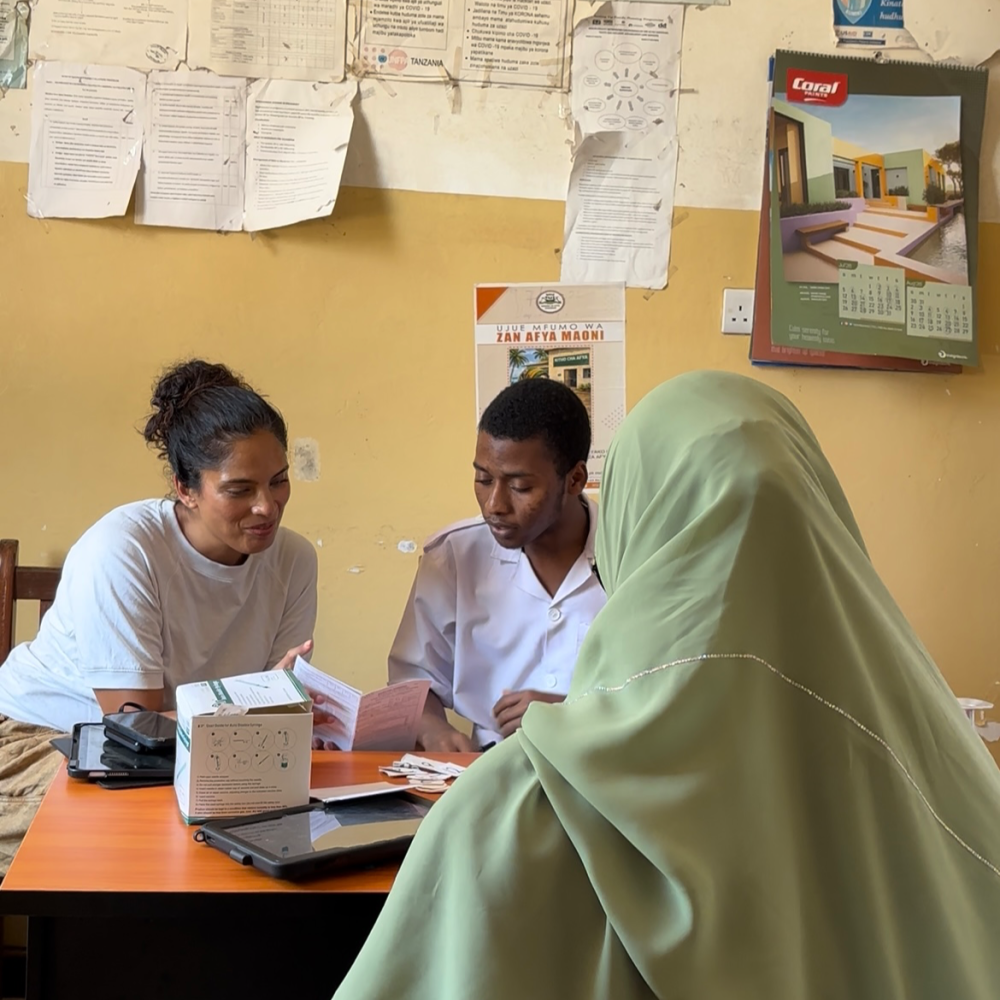
WAJAMAMA partner and clinician, Sorayya Kassamali Rickicki, and a government nurse-midwife in consultation during a preceptor training session.
Three Lessons Shaping the Next Phase
1: Training that Responds to the Facility
We began the year with a standardized training plan. In practice, healthcare workers arrived with different levels of experience, clinical confidence, and competing demands; thus, we have continuously adapted the model to suit each facility’s needs and resources.
Our initial six-day training is being replaced by a low-dose, high-frequency approach: shorter clinical sessions - followed by regular preceptorship, mentorship and coaching in the facility. At Bwejuu and Chukwani, government healthcare teams are now forming their own patient groups and beginning to facilitate Group Care sessions, with WAJAMAMA providing support alongside them.
In July, 22 healthcare providers from our next three embedding sites were also trained in Psychological First Aid and mental health supporting skills, including postpartum depression.
Mental health is being integrated with urgency into Group Care as the model expands. This is a crucial step towards the maternal care we want to see: care that recognizes a mama’s mental and physical health as inseparable!
2: Making the Group Care Model (GCM) Easier to Deliver
As we prepare to expand to three more facilities, we are also looking closely at how work is shared.
Community Health Workers will take on a clearer role within GCM teams. They will help organize women into cohorts, follow up between sessions, and support selected point-of-care activities including urinalysis and haemoglobin testing. This will give nurse-midwives more time for clinical care, counselling and direct engagement with mamas.
Facilities are also receiving essential equipment, including Dopplers, blood pressure monitors, haemoglobin testing supplies and tablets for clinical records. We are preparing to introduce cardiotocography within GCM to strengthen monitoring for women who need closer assessment during pregnancy.
The aim is to make high-quality care easier to deliver in busy public facilities.

At Makunduchi Health Facility, a nurse-midwife oversees a blood pressure check during GCM, helping mothers understand their readings and what a healthy range looks like.
3: Connecting GCM to National Systems
In May, 20 healthcare workers from Bwejuu and Chukwani completed training on ZanEMR, covering the full patient journey from registration to exit. Both facilities have since started using the system.
In June, WAJAMAMA worked with Ministry data managers and the DHIS2 team to map GCM data points and begin developing reporting within Zanzibar's national health information system.
This will give healthcare teams better visibility of who is being reached, where gaps remain, and where care can improve. As Group Care expands, its data should serve the wider health system as well as the programme itself.

Healthcare workers from Bwejuu and Chukwani train on ZanEMR before going live at their facilities in May.
What We Are Watching Next
The next phase will test how these changes work across different facilities. We will be watching three areas closely:
Workforce: whether Community Health Workers can reduce pressure on clinicians and improve continuity of care.
Training: whether ongoing preceptorship strengthens clinical practice and confidence over time.
Data: whether routine government systems can give teams the information they need to improve care.
Built with Partners
The Zanzibar Ministry of Health remains a close partner, supporting our implementation efforts of GCM into the public healthcare system.
In July, we also had the privilege of sharing our progress and plans for Group Care with Her Excellency Mariam Mwinyi, First Lady of Zanzibar and Founder and Chairperson of the Zanzibar Maisha Bora Foundation (ZMBF). We are grateful for her time, encouragement, and longstanding commitment to improving the health of women and children across Zanzibar.
UNICEF is supporting technical work around digital integration, including Fetosense and government information systems. Georgetown University continues to support curriculum development based on real cases from the field, and Spring Impact is continuing to work with us on our scaling approach.

WAJAMAMA meets with Her Excellency Mariam H. Mwinyi, First Lady of Zanzibar.
Reasons to Celebrate
This period also brought two proud moments for WAJAMAMA! Nafisa Jiddawi joined the Global Board of Group Care Global (GCG), bringing Zanzibar’s experience into the global conversation of Group Care as well as creating new opportunities for us to learn from global practice.
Nafisa was also featured in Zanzibar Magazine, sharing more about the values shaping WAJAMAMA’s work and her belief that women’s health and reproductive care should be empowering experiences.

Nafisa Jiddawi, Founder and CEO of WAJAMAMA, featured in Zanzibar Magazine in a conversation on women’s health, reproductive care and the ideas driving WAJAMAMA’s work.
Looking Ahead
The first half of 2026 has reinforced that better outcomes require us to keep learning.
This has meant spending more time in facilities, listening to healthcare workers, looking closely at the data, and changing our approach when needed. This has already shaped how we train, mentor, and support teams, and we expect it to keep shaping the work ahead.
Strengthening a health system is a long-term effort. Progress depends on being willing to test, refine, and keep improving what happens in everyday care.
And we will continue to share what we learn along the way!
We thank you for being here.
With love and light,
The WAJAMAMA Team